.svg)
One stone, not many
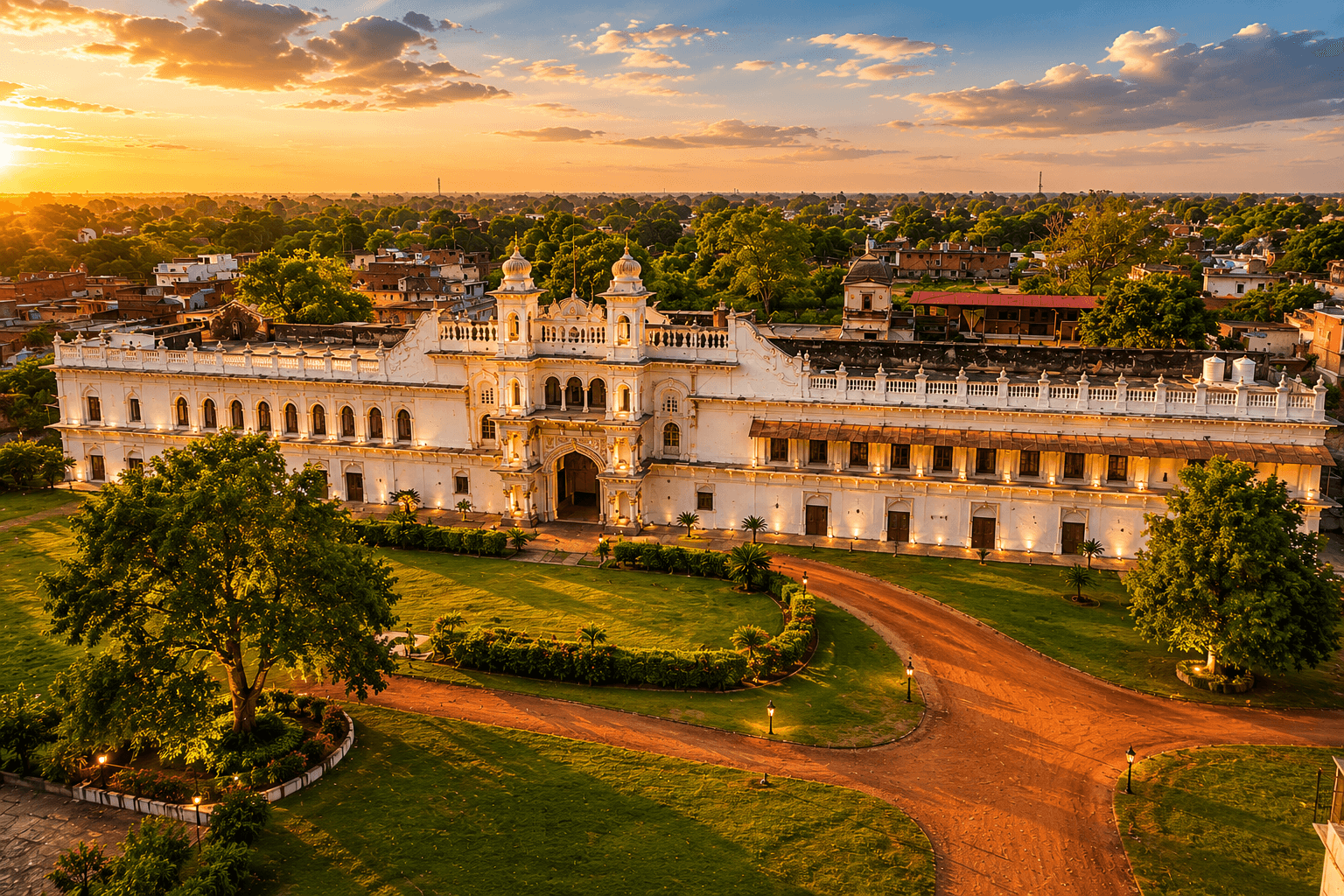
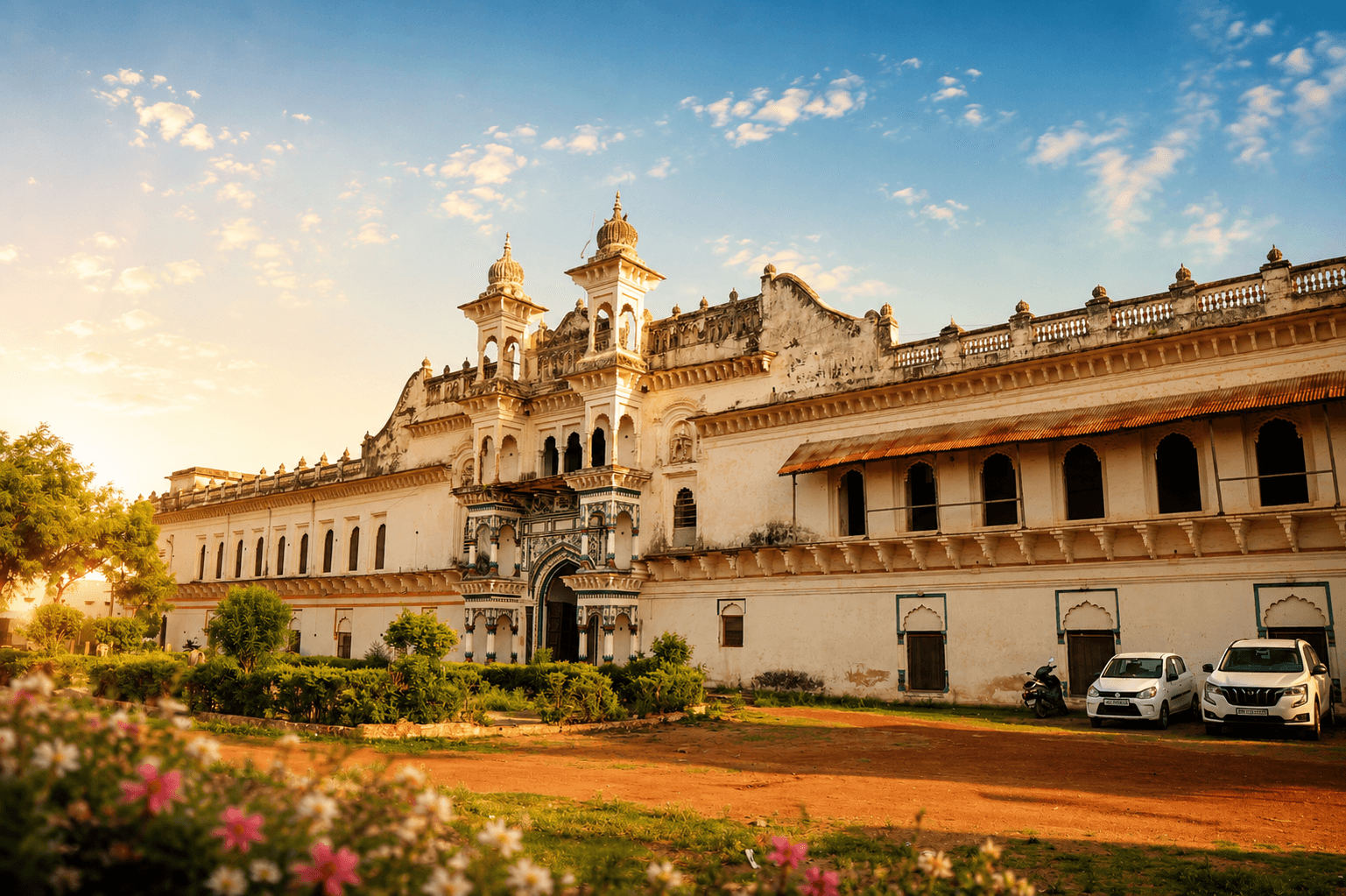
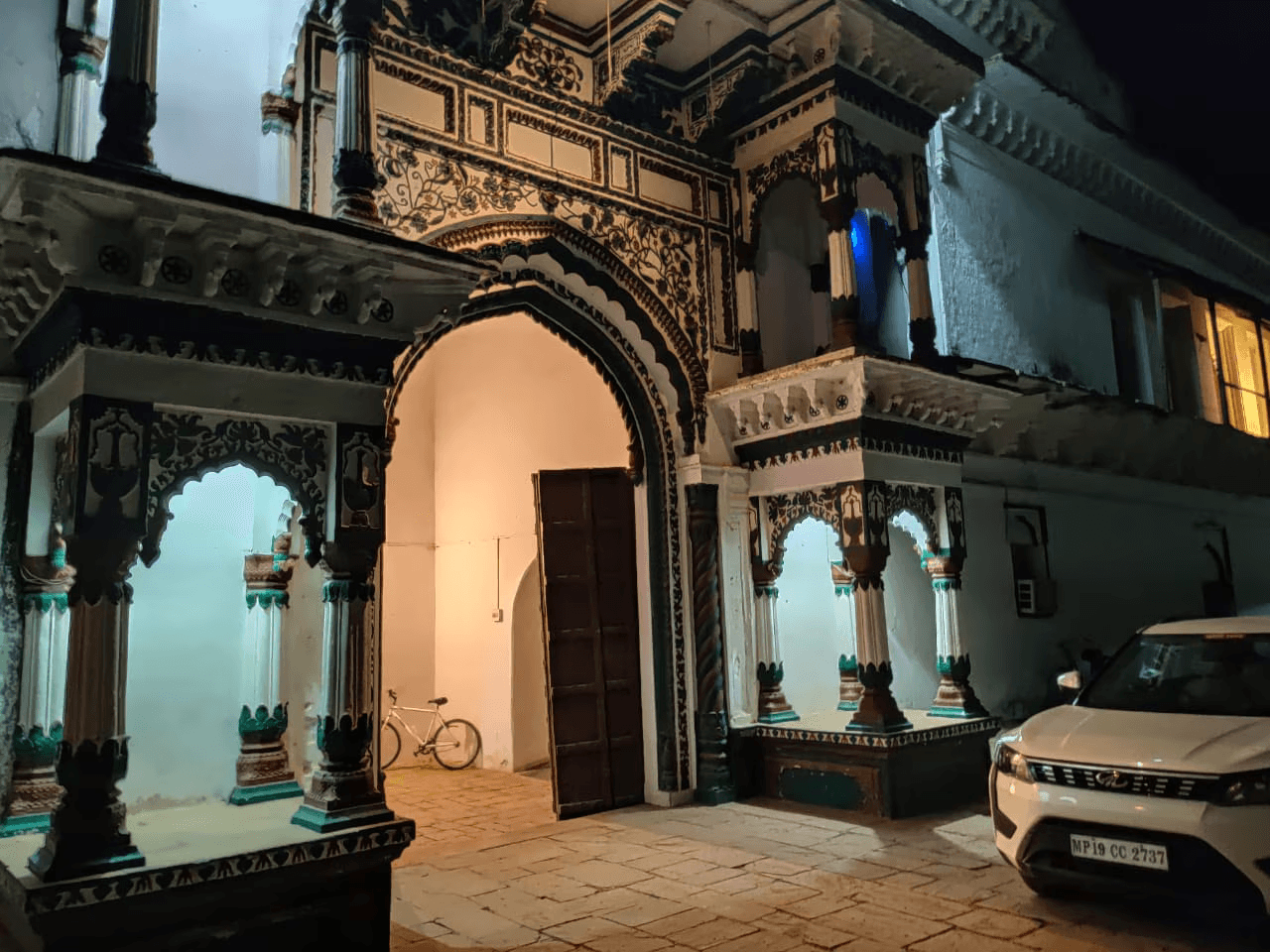
Most palace gates in India are assemblies — blocks laid on blocks, mortar bridging the seams. Ours is not. The Kothi gate was hewn from a single mass of Bundeli sandstone, dragged into place before the palace itself was raised in 1738. Nearly three centuries later, the gate is the oldest continuously standing structure on the property.
The restoration brief was blunt: preserve every visible year, remove nothing that time had earned honestly, and never make it look new.
Why photographers chase it at golden hour
At roughly forty minutes before sunset in winter, low light rakes across the west-facing carvings and reveals detail that the noon sun flattens. Wide lenses at 16–24mm frame the full gate; an 85mm portrait through the arch compresses the courtyard behind into painterly bokeh.
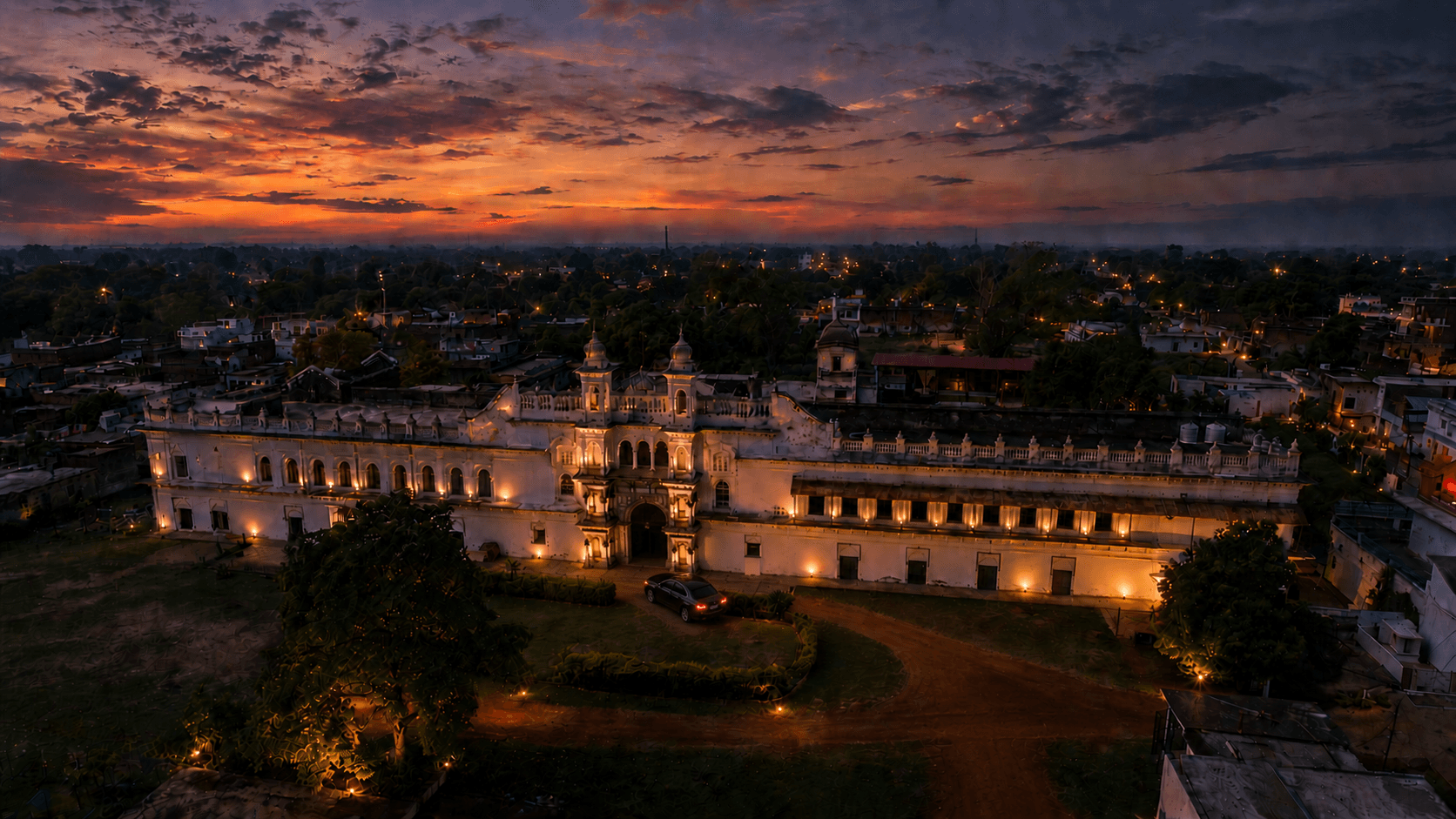
We keep the approach clear during the last hour of light — no vehicles, no crew clutter — so couples can move through the frame without a chaperone in every shot.
Three restoration rules from the family
The family set three rules before the first tool touched the stone. They still guide every conservation call we make.
- No new sandstone unless a piece has actually failed structurally. Weathering is not damage.
- No sealants, no coatings. The gate has breathed for 287 years; it will keep breathing.
- Every intervention documented and dated on the family archive — future generations should be able to tell what we did and what we found.
“You do not restore a 287-year-old gate. You keep it alive for the next 287.”
Shooting at the gate
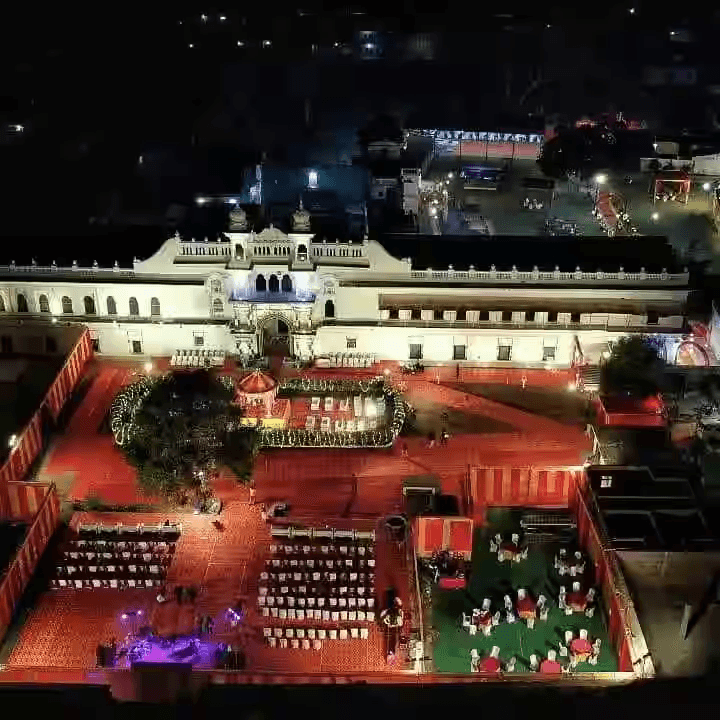
Half-day and full-day location packages include gate access with a family liaison, controlled crowd, and golden-hour priority. See dates on our reserve page.